
One of the first signs I was going to be a different self-help guru was when I looked at my experience with self-help books. Pushed by network marketing huns to “invest in myself,” I bought into it hard. With no hesitation, I pick up a handful of self-help books without really thinking about it. As many self-help book defenders would encourage, arming yourself with knowledge can put you further ahead in all manners of life.
Want to budget better? Pick up a personal finance book.
Want to have better relationships? Read from a professional relationship counselor.
And self-help was not so different. Broadly covering emotional speedbumps, improving productivity, or waxing philosophic on what it means to be better, we can appreciate those words in different ways.
But then, I started thinking about it.
Looking into my own life at the time, my 23 year old self realized the last time I ever picked up a book was around the time it was acceptable to pick up a Harry Potter book and read through it—sometime around 2007 when the final book of the series was published. Trying to think even more recently, at that time there might’ve been a few books from Garth Nix that I read sporadically.
This was my first time dipping into the self-help world, and the last books I read were easily 5 or 6 years ago.
Setting that aside, I still took a shot at it regardless. I picked up audio books to listen to on the bus alongside some iconic books that advocates suggested. The Magic of Thinking Big, The 48 Laws of Power, How to Win Friends and Influence People, and of course, The Secret (kinda).
I started in earnest, but things started to change a little after a few weeks in…
I hit a wall with audiobooks, namely in that it was hard to follow. The sliders and being able to only skip at 30 second intervals made re-listening bothersome. In addition, the books I was reading didn’t measure up to the hype. Like Harry Potter, reading them was bland, uninteresting, and uninspiring—even for my teenage self.
To the self-help book’s credit, my teenage self was not an avid reader and not a good judge of what is a good book.
However, these are supposed to be books to help you grow. To be a better person. To guide you through the uncertainties of life and be this handy mentor you can just refer to at any time.
Why were these books feeling so useless and pointless to read or listen to?
Yes, But…
From articles like these to the multitude of videos, people’s experiences with self-help books are definitely bleak. Many attest that reading something else (non-fiction or avoiding [insert popular self-help book title here]) was a better experience. And without a doubt, you probably have some horror stories or some recognition of particular self-help titles like the ones mentioned before and nothing else.
I’ve been there before.
But what’s so interesting to me is that despite all this, the self-help book industry is flourishing.
According to data from 2022, the self-help book industry looks like this:
- Over 15,000 books published every year.
- Data shows the self-improvement market is worth $45.72 billion with steady growth of 7.9% through to 2034.
- Around 10 million self-help books were estimated to be sold each year.
- Meanwhile, more recent data shows that in the US alone, the personal growth market will hit $12 billion.
The question to be asking is why. Because understanding why self-help books are flourishing so much reveals why we can’t seem to get much out of them. This connection really reveals why these books are so useless.
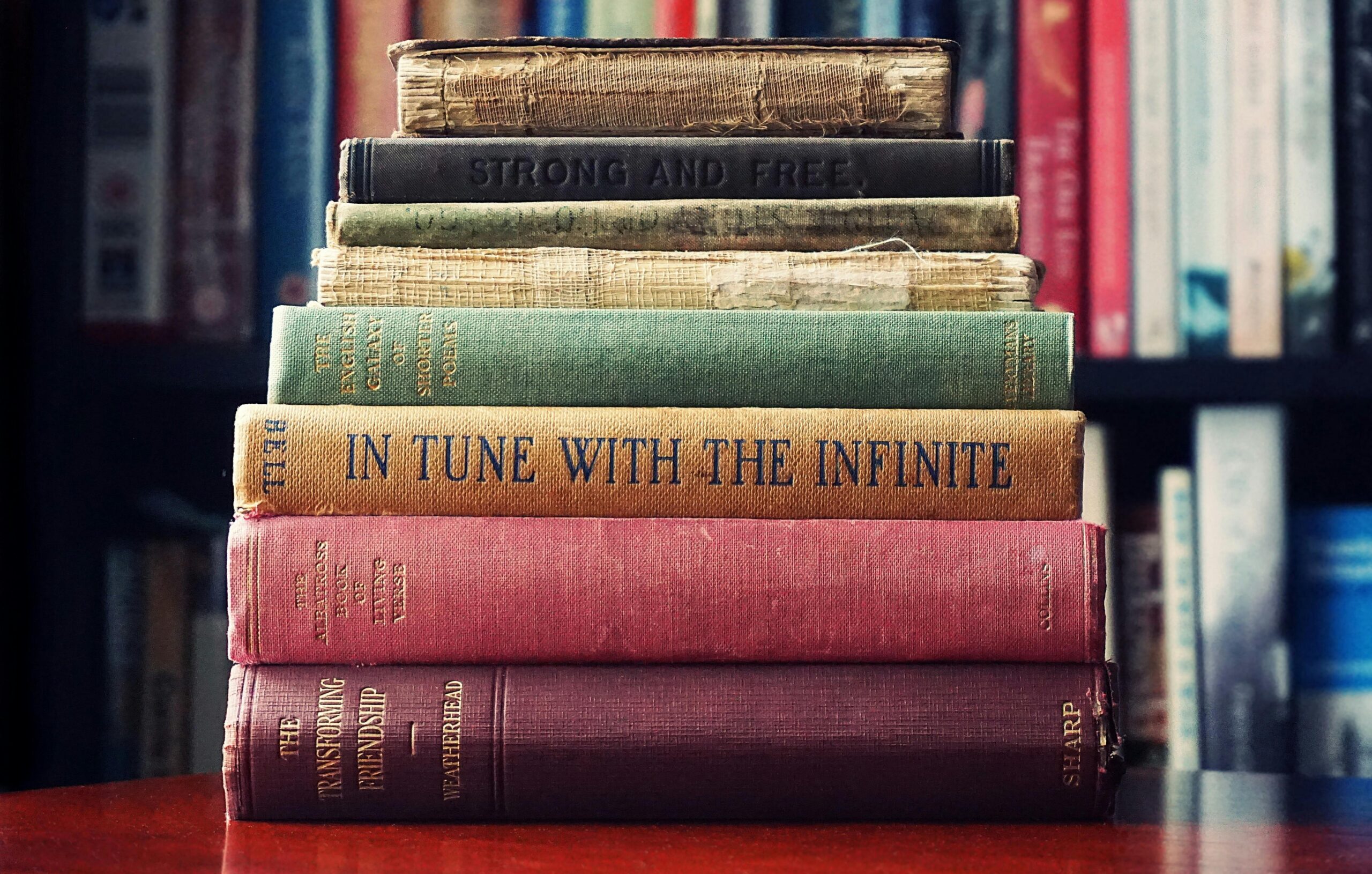
Many & Cheap Books
Based on the aforementioned data, it’s easy to see why this market will grow. It comes down to this one thing:
Everyone has problems, and they will do anything to solve them.
At our core, we always want to improve and grow. It’s not a bad thing, but self-help gurus have always had a way of framing that desire.
They focus on problems and how their solutions will solve them.
On the surface this is reasonable. Popular books like The Secret, How to Win Friends and Influence People, and more seem well-meaning. Their sage advice gets recommended time and time again.
But despite these being best sellers, how many people genuinely find it useful? How influential have these books been?
Digging deeper, these books, much like popular gurus, have bad track records.
Without a doubt, people have found these useful and found some niche case where reading that book is helpful. But it’s not as life-changing or awe-inspiring as the book presents its solutions and methods to be.
Lavishing praise on people, as Dale Carnegie suggests, isn’t going to suddenly make people like you more.
Meditating is calming, but it’s not the gateway to “manifesting what you want in life.”
The reality is that people are simply addicted, and the industry preys on this.
With the overwhelming amount of books, it’s easy for us to think that one bad book is just that. All you need to do is find another, and maybe that’ll fix the issue. Little do you realize that you’ve made a gambler’s fallacy.
Self-help books don’t change because people’s buying behaviour isn’t changing. And with the ease of entering the self-help market, it’s easy to push out self-help books with little thought.
The Disconnection Between The Book And Reality
This issue isn’t just a self-help book thing but rather a problem with our education system as a whole. The issue in question boils down to how we learn and the barriers there are to learning.
In school, the barriers are as follows:
- Fear of failure—fear or worry that we will fail and therefore will.
- Limited exposure—unfamiliarity with the topic leads to steeper learning curves. Higher likelihood to stick to initial interpretations or opinions.
- Lack of context – Information that isn’t relatable to your life.
- Lack of recall—being in a learning environment where you need to memorize information rather than using your brain.
Self-help books face these same barriers, as the end goal is the same. The only difference is that teachers are aware of these problems and mitigate them. Self-help gurus do not.
Teachers will apply different teaching methods. Self-help gurus present one avenue of presentation.
Teachers are there to answer questions and help lagging students. Self-help gurus will demand hundreds or thousands of dollars for “coaching.”
But even beyond that, self-help gurus are worse for one other reason.
They blame you for the problems that you are facing.
It seems like it’s a small gripe, but one of the reasons self-help books feel useless comes down to presentation.
These books are delivering relief by solving a problem you want to solve. But instead of trying to provide several avenues and options, it’s not uncommon for gurus to deliver a single solution or idea and say it’s the greatest idea ever.
It sucks so much because even if the idea is solid and their arguments are sound, they lack context. Unlike a teacher who can visibly see a student’s performance and get a general read, self-help gurus are oblivious.
And even if that advice can be well-meaning, it doesn’t always stop people from leaning into that gambler’s fallacy. It doesn’t stop people from thinking that maybe the next book, course, or article will be the game changer.
Or that maybe you’re destined to forever be plagued with this problem.
Self-Help Books Are Needlessly Long
And this is all accentuated by one last thing: the books are needlessly long.
As a self-help guru myself, I get that you need to defend your arguments. This goes especially with advice. However, even that doesn’t need chapters of evidence or dozens of supporting ideas.
A good example of this stems from one of the most popular books in self-help: Atomic Habits.
Despite this book being 320 pages long and going into extensive detail, the general idea can be summarized into a single sentence.
While that can be said about books and articles overall, books feel more over the top. They’re filler chapters, similar to filler episodes in an anime—a helpful tool to develop characters or an idea but can also be a waste of time.
When this is combined with people’s short attention spans and the fact it’s nothing but words and not pretty pictures, it makes sense why people find these books useless. Even if someone manages to get through it, it can be hard to piece together what was useful and what wasn’t, let alone retain that information.
And even useful books fall into this too.
A good example of this is a book called Migraine Relief. As you can guess, this book’s intended result is to provide methods to relieve migraines.
The only big difference here, though, is the author isn’t a self-help guru. They’re a researcher who has studied these methods.
And so they conducted an experiment on just how impactful their book really was. They reached out to the people that bought the book, asked for their thoughts on the book, and recorded it.
The results were staggering.
It turned out that a fifth of the people who bought the book read the whole thing. And out of the fifth who did read it, only 2 to 4 percent of them followed the instructions.
Coincidentally, those who did found the book to be helpful. But that doesn’t change the fact that only a small number of people bothered to read a book they spent money on.
Conclusion
Now despite my ranting and raving, I still believe that self-help books have a place for us. People do still have problems and books are cheap and easy solution. But we should be expecting more from that solution.
Authors should be willing to talk with those readers and perhaps expand on the book if people are running into a similar problem that the book doesn’t address or isn’t as clear about. This also coincides with authors being easy to access too.
Furthermore authors should be writing books themselves or hiring ghostwriters rather than using ChatGPT to do everything for them.
But beyond that, us as consumers can also look at authors own behaviours and backgrounds too. A quick google search can tell you a lot about a person and their general qualifications. And people should be doing that while keeping bias in mind.
At the end of the day, picking up a self-help book should be treated in the way it’s often been framed as: an investment in your future. It’s about time the authors and the books themselves begin to act more like that rather than give the vibes of one and keeping that mentality in mind for ourselves can ensure we have a better reading experience all around.